

Use a landing page when one audience has one main question and one clear next action. Use a multi-page business website when visitors need to compare services, inspect evidence, find different information, or return for ongoing updates. Neither format guarantees enquiries or search traffic; the content and working customer journey matter more than the label.
A landing page can be part of a larger site. It need not be a temporary advertising page. Conversely, a small business site can begin with only a few well-planned pages. The useful decision is whether one page can answer the visitor’s questions without becoming a crowded menu in disguise.
Test the actual visitor journey
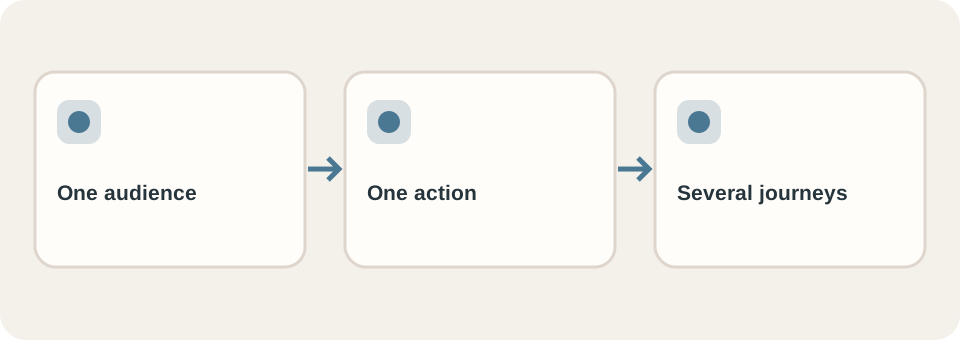
Write the visitor’s starting question and the action they should take. A one-day event might need a date, place, agenda, trust details, and registration. That can fit one focused page. A consultancy with three services may need separate explanations, examples, eligibility questions, and contact options. Compressing those into one scrolling page can make comparison harder.
| Ask | One focused page may fit | Several pages may fit better |
|---|---|---|
| Who is arriving? | One audience with a shared need | Different audiences or service categories |
| What must they compare? | One offer and a small set of details | Distinct services, products, cases or locations |
| What changes later? | Occasional campaign updates | Regular articles, projects or catalogue entries |
| What is the next action? | One enquiry or registration | Different actions at different decision stages |
This is a planning aid, not a rule about page count. If one page becomes difficult to scan on a phone, that is a signal to revisit its structure. The W3C guidance on page structure explains why meaningful headings and regions help people navigate content.
Compare scope without hiding the work
A cheap-looking one-page quote may exclude writing, images, forms, analytics, translations, or future editing. A multi-page quote may include reusable layouts and an editor, or it may require support for every update. Ask both suppliers to price the same content, customer action, ownership, and handover assumptions. The website brief checklist gives you a form to send to each supplier.
For a fictional neighbourhood bakery, a temporary cake pre-order campaign could use one page with collection dates and a working order enquiry. A lasting site with wholesale information, a menu, store details, dietary notes, and hiring needs would probably benefit from separate pages. This example describes scope, not a client result.
Decide what can expand later
Ask where content will live and how a second language, service page, or product category could be added. If expansion requires replacing the first build, include that tradeoff in the decision. A landing page is still a good choice when its focused job is likely to remain focused.
DT Software’s website options show live design demos and the stated scope of preset and custom landing pages. The demos are illustrative, not customer projects. Send your visitor journey and content list when asking for a quote; those details make the format decision concrete.